 S
Short answer: for a chain of allergy and asthma clinics in Kerala, click-to-WhatsApp ads didn't bring the results we needed. We switched to Meta lead forms with a few qualifying questions (using conditional logic), ran one campaign per clinic location, and tracked every lead to revenue with the clinic team. In September 2026, ₹49,634 in ad spend brought ₹3,28,100 in revenue, about a 6.6x return. In the first 10 days of October, ₹9,609 brought ₹1,21,600. And this clinic has no surgeries or high-ticket procedures.
When people talk about big returns from healthcare ads, it's usually about surgeries, IVF or cosmetic procedures, where one patient can be worth lakhs. This case is different, and that's why I wanted to write it down properly.
I've been running Meta Ads for Allergy Asthma Foundation for about six months. It's a network of outpatient allergy and asthma clinics across Kerala. Their revenue comes from consultations and allergy tests, not surgeries. So every rupee of ad spend has to bring people who actually walk in.
Here's what didn't work, what we changed, and the numbers.
The challenge: outpatient care, six locations, lower ticket size
Three things made this harder than a typical clinic campaign:
- No high-ticket treatments. Patients come for consultations and tests. The value of each visit is modest, so a lot of junk leads can wipe out the return quickly.
- Several locations. The clinics are spread across Kerala, including Kochi, Kozhikode, Thrissur, Palakkad, Perinthalmanna and Mannarkkad. A lead from the wrong area is useless to the clinic that receives it.
- Busy clinic teams. Staff handle walk-ins and calls all day. Every enquiry that goes nowhere takes time away from real patients.
What we tried first: click-to-WhatsApp ads
We started with ads that open a WhatsApp chat with the clinic. On paper it's perfect for Kerala: everyone uses WhatsApp, and starting a chat is one tap.
For this client, it didn't bring the results we needed. Looking back, a few reasons usually explain why WhatsApp ads struggle for outpatient clinics:
- It's too easy to start a chat. One tap costs the person nothing, so many chats are curiosity, not intent.
- The qualifying happens later, by hand. Someone at the clinic has to ask the same questions in every chat: what's the problem, which location, when can you come.
- Speed matters too much. If a reply takes an hour on a busy day, the person has moved on.
- It's hard to connect a chat to revenue. Chats are scattered across phones and people, so it's difficult to see which campaign brought which patient.
What we changed
1. Switched to Meta lead forms
Instead of opening a chat, the ads opened a short Instant Form inside Facebook and Instagram. The person sees the questions, answers them and submits. It takes a few more seconds than tapping WhatsApp, and that small effort is the point: people who aren't serious usually drop off.
2. Added qualifying questions with conditional logic
The form asks a few multiple-choice questions before someone becomes a lead:
- Who is the visit for? (for example, yourself or a family member)
- What is the main health concern? (for example, a skin, food or dust allergy)
- When are you planning to consult?
- Which is your nearest location?
With conditional logic, the next question depends on the previous answer, so the form stays short and relevant. The clinic team gets leads that already say what the person needs, where and when. The "when are you planning to consult?" question alone does a lot of filtering: someone who isn't ready to visit yet is handled very differently from someone who wants to come soon.
3. One campaign per clinic location
Each location got its own campaign with its own daily budget (around ₹400 to ₹420 a day per location in October) and its own targeting. This one change made the results much easier to read, because every lead, rupee and visit belonged to a specific clinic.
4. Tracked every lead to a visit and revenue
Every lead went into a shared sheet with the clinic team: lead status, follow-up date, number of follow-ups, whether an appointment was booked and whether the person visited. At the end of the month, each location shared the revenue from these patients.
That's what allowed us to judge campaigns by revenue, not by cost per lead.
A cheap lead that never visits is the most expensive lead you'll ever pay for.
The results
| Period | Meta Ads spend | Revenue reported by the clinics | Return |
|---|---|---|---|
| September 2026 | ₹49,634 | ₹3,28,100 | about 6.6x |
| 1 to 10 October 2026 | ₹9,609 | ₹1,21,600 | about 12.7x |
A few more numbers from September: the campaigns reached about 11 lakh impressions and 17,196 link clicks, and the two main form campaigns ran at about ₹41 to ₹45 per lead.
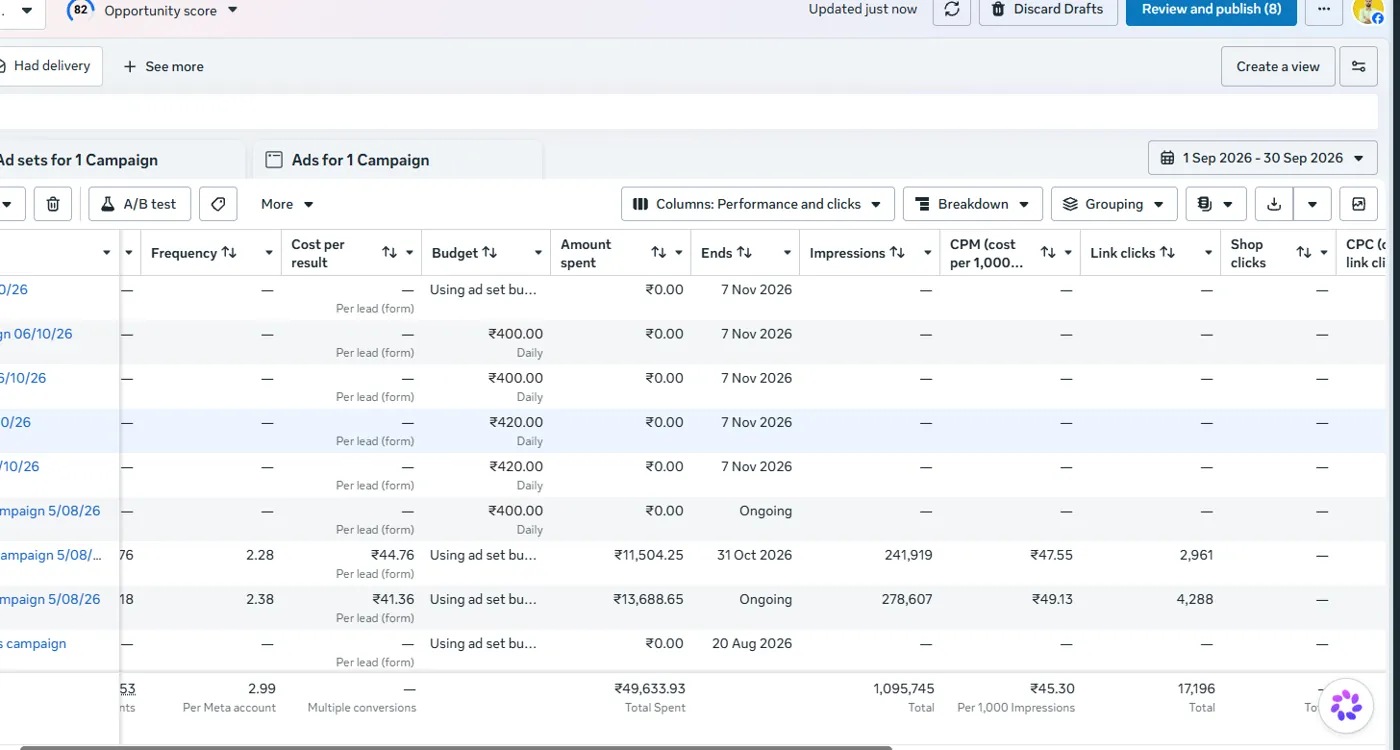
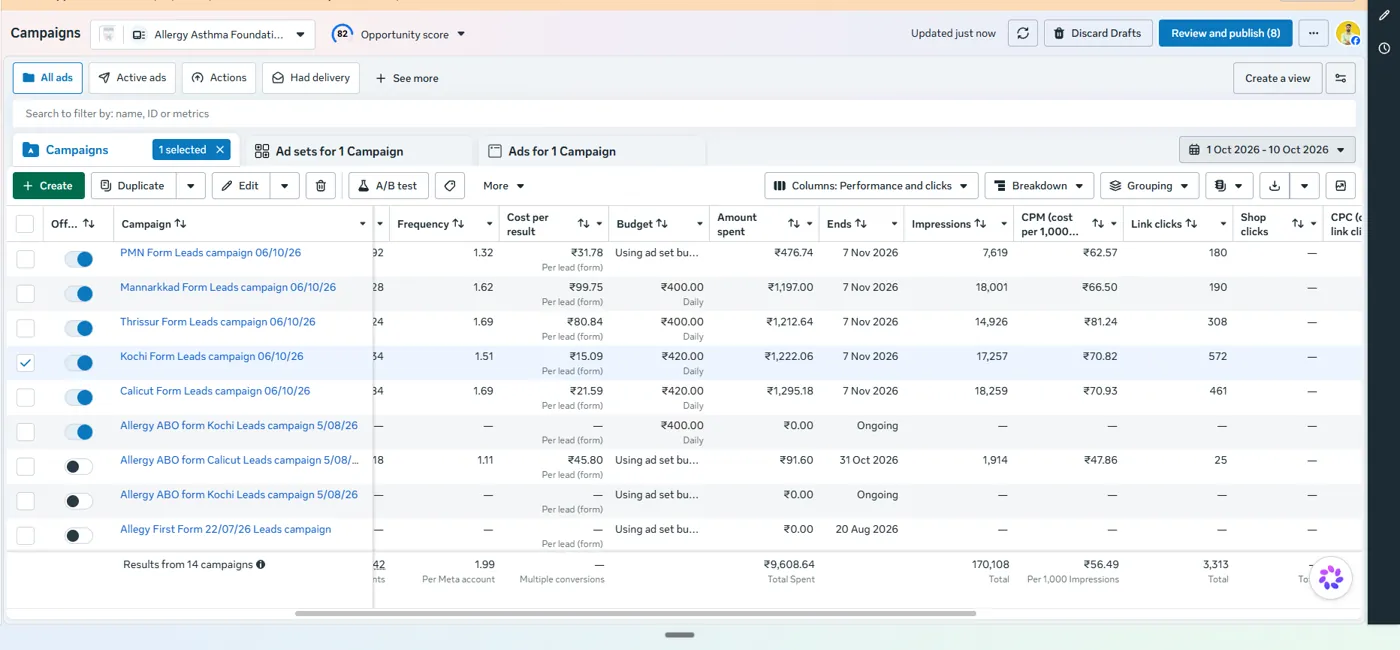
Revenue figures are what the clinic team reported for patients who came through these Meta Ads leads. Results depend on the business, location, budget and follow-up, so treat them as a real example, not a promise.
What the numbers taught us
Locations behave very differently
In the first days of the new location campaigns in October, cost per lead ranged from about ₹15 at the cheapest location to about ₹100 at the most expensive. If we had run one campaign for all of Kerala, Meta would simply have pushed budget to the cheapest area, whether or not that clinic could convert those leads.
Revenue is concentrated
In September, one location brought in more than half of the total revenue. Without location-level tracking, we wouldn't have known where to put more budget, or which clinic needed help with follow-up.
Small budgets can still work
₹400 a day per location isn't a big budget. What made it work was not the spend, it was asking the right questions before the lead arrived and following every lead to the end.
When WhatsApp ads still make sense
I'm not against WhatsApp ads. They can work well when:
- Your team can reply within a few minutes, all day
- The service is simple and the price is clear
- You have one location, so there's no routing problem
- You use proper tools (like WhatsApp Business with labels or a CRM) to track which chats became customers
For a multi-location clinic with a busy front desk, lead forms with good questions were the better fit.
How to set up a qualifying lead form in Meta
- Create a campaign with the Leads objective and choose Instant forms as the conversion location.
- Choose the Higher intent form type, which adds a review step before submitting.
- Add 3 or 4 multiple-choice questions that sort people by need, location and timing. Avoid open text boxes, which slow people down and give messy data.
- Use conditional logic where the follow-up options depend on the first answer.
- Run one campaign or ad set per location if you have more than one branch.
- Send leads to a shared sheet or CRM, and agree with the team how quickly every lead will be called.
- Review results by visits and revenue per location every week, not only cost per lead.
A note for clinics: stay within the NMC rules
Healthcare ads in India now follow the NMC's new advertising guidelines, issued on 6 October 2026. Keep ad content factual and educational, and avoid testimonials, before-and-after images, discounts and "best clinic" style claims. Lead forms also collect health information, so store it carefully and share it only with the team that needs it. I've explained the rules in detail in my guide to the NMC advertising guidelines 2026. If you're still deciding between platforms, read Meta Ads vs Google Ads for clinics in Kerala.
The takeaways
- For outpatient clinics, lead quality matters more than lead volume.
- A few good questions in the form can do the qualifying your staff would otherwise do by hand.
- Split campaigns by location so you can see where the money actually comes from.
- Judge campaigns by visits and revenue, not cost per lead.
If your clinic's ads bring enquiries that don't turn into patients, I can look at your setup with you in a consultation. You can also see this and other projects in my portfolio.
Related reading
- Meta Ads vs Google Ads for clinics in Kerala: which should you start with?
- NMC advertising guidelines 2026: what doctors and clinics can and can't do
- How I run Meta Ads for clinics and B2B brands
- WhatsApp Business charges from October 2026: what you actually pay
FAQ
Are Meta lead forms better than WhatsApp ads for clinics?
Not always, but often for clinics with several locations or a busy front desk. Lead forms let you ask qualifying questions before a person becomes a lead, so the clinic team calls people who already said what they need, where and when. Click-to-WhatsApp ads can work well when a team can reply within minutes and the service is simple to explain.
How do you improve lead quality in Meta lead ads?
Ask a few multiple-choice questions that a casual clicker won't bother with: who the visit is for, the main concern, when they plan to visit, and the nearest location. Use the Higher intent form type so people review their details before submitting, and track every lead until it becomes a visit or is closed, so you can judge campaigns by revenue instead of cost per lead.
What is conditional logic in a Meta lead form?
Conditional logic means the next question or the available answers depend on what the person chose before. It keeps the form short and relevant, for example showing different follow-up options based on the health concern selected, and it helps filter out people who are not ready to visit.
Is cost per lead the right way to measure clinic ads?
No. Cost per lead is useful for spotting problems, but a cheap lead that never visits costs more than an expensive lead that does. In this case, cost per lead between locations ranged from about ₹15 to ₹100 in the same week, and the right decision depended on which locations brought real visits and revenue.
Can clinics in India run Meta lead ads under the NMC rules?
Clinics should follow the NMC advertising guidelines issued on 6 October 2026: keep ads factual and educational, and avoid testimonials, before-and-after images, discounts, superiority claims and patient solicitation. Lead forms also collect health information, so handle that data carefully and only share it with the clinic team that needs it.